COLLECTION · Movie · 2022
Men
In the aftermath of a personal tragedy, Harper retreats alone to the beautiful English countryside, hoping to find a place to heal. But someone — or something — from the surrounding woods appears to be stalking her, and what begins as simmering dread becomes a fully-formed nightmare, inhabited by her darkest memories and fears.
* 6.1 TMDB (1,423)FantasyHorrorThrillerUnited Kingdom · United States
Directors
Countries
United Kingdom · United States
Studios
A24 · DNA Films
Runtime
100 min
Age rating
R
Release
20/05/2022
Score · TMDB
6.1 / 10 (1,423)
Where to watch
 HBO Max Amazon Channel
 Cinemax Amazon Channel
 HBO Max
 Cinemax Apple TV channel
 Amazon Video
 Apple TV Store
 Fandango At Home
 Spectrum On Demand
 Plex
PlexRadar
Get notified when it hits streaming, rent, or buy below your target price.
Cast




Comments
Sign in to comment and discuss this title.
Loading
User reviews

FolknHell
★ 4.0 / 10
*Men* is at its best when Alex Garland stops explaining himself.
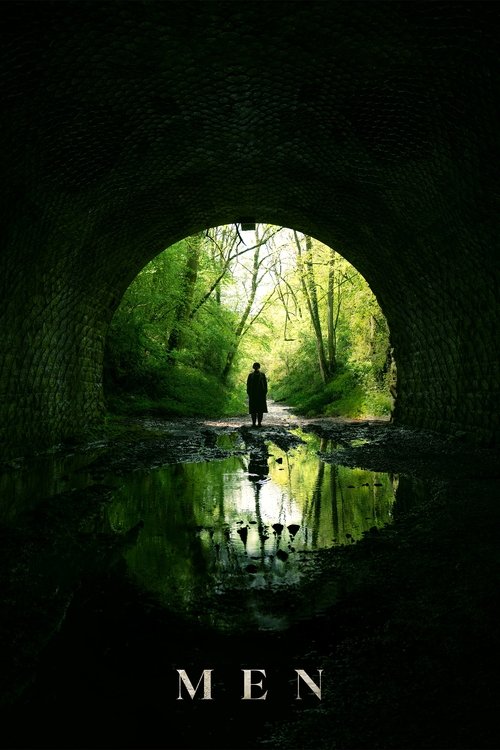
Harper has escaped to the countryside after the horrific death of the husband she was preparing to leave, and for a while the film gives her something remarkably simple: space. She walks through saturated green woodland, feels the rain, reaches an abandoned railway tunnel and begins playing with its echo, turning her own voice into something strange and beautiful. Then a distant figure appears at the other end.
That sequence contains most of what *Men* does well. Something private and restorative is invaded. The tunnel can be a birth canal, a sexual image, a passage into Harper’s own head, or simply a very effective bloody tunnel with somebody unpleasant standing in it. The film is strongest while all those possibilities remain alive.
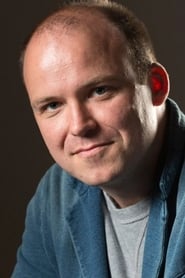
Rory Kinnear subsequently becomes virtually every male face Harper encounters: landlord, policeman, vicar, child, pub regular, naked intruder. It is a deliberately grotesque trick, and an effective one. These men are less characters than variations on pressures Harper already knows: patronising sympathy, entitlement, accusation, threat. Even the apparently consoling vicar puts a hand on her knee before carefully steering responsibility for her husband’s death back towards her.
Garland keeps connecting that guilt physically. Injuries inflicted during Harper’s ordeal begin reproducing the wounds we have already seen on her husband, until the various Kinnears finally collapse into one extraordinary chain of births. It is hideous, funny in the deeply unfortunate way body horror occasionally becomes funny, and thematically about as subtle as being hit with the church font.
That is the problem. *Men* spends much of its running time creating an uncanny psychological space, then becomes increasingly determined to tell us what we have just experienced. The repeated births are audacious, but by then the film has moved from suggestion to insistence.
Its folk-horror material works better. The Green Man, the ancient carvings, fertility imagery, old house and isolated village all give Harper’s trauma a language older than the particular relationship that caused it. We would not particularly call *Men* a folk-horror film. It is something more interestingly slippery: a psychological allegory dressed in folk-horror clothes because those clothes already carry ideas about sex, birth, guilt and inherited power.
There is plenty here to admire. We just wish Garland had trusted the tunnel a little longer.
---
Reviewed by FolknHell, the folk horror film podcast · folknhell com
Hear the full FolknHell podcast discussion of Men: folknhell com/men-review along with our other reviews, transcripts and episodes.

Nathan
★ 4.0 / 10
Men, directed by Alex Garland, is a movie that fails to live up to its potential despite having some redeeming qualities.
The cinematography is fantastic and haunting, with creative shots that add to the overall experience. But this quality dips towards the end, with the director focusing more on horror elements in the tune of slasher/home invasion instead of psychological. The sound design is excellent, and the sinister feel really adds to the movie's overall mood. The acting is good, but nothing too spectacular. No performances really blew me away. However, the body horror in the movie is fantastic, and it had the hair on the back of my neck standing up. Even though I do think it is not entirely needed, I have to give props in that department.
Unfortunately, the script is pretty dreadful. The message is very in your face, overly complex and did not work for me. It was quite a turn off too, as it seemed as though the director was trying to say all men were the same and were terrible human beings. I know it had deeper meaning than that, but that surface level message is undeniable. I mean honestly, every person she encounters is such a massive piece of shit, not one person would have held out a helping hand?
Something that did really bother me was that the movie starts off as a creative psychological horror, but takes a spin in the third act that divulges into body horror mixed with slasher elements, which really takes away from the intriguing first 45 minutes of the film. Combine that with dreadful pacing, which will result in the audience feeling like they're waiting for the movie to be over.
Overall, Men is a forgettable movie that had potential, but unfortunately, failed to deliver in many aspects.
Score: 40%
Verdict: Poor
CinemaSerf
★ 6.0 / 10
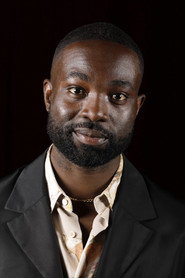
"Harper" (Jessie Buckley) heads off to rural Gloucestershire in England to take a break after the apparent suicide of her husband "James" (Paapa Essiedu). On arrival at the manor house she has rented for a fortnight, she is welcomed by the typical country squire type in "Geoffrey" (Rory Kinnear). She goes for a walk, during which she notices that she is being followed - and the man following her is naked. Spooked, she returns to her home to find that this is just the start of some seriously bizarre goings on in this tiny hamlet. What flaws this all from the start for me is that we see everyone in this community - the policeman, vicar, schoolboy, pub landlord as variations of the same man - Kinnear, yet the "Harper" character does not seem to clock this; she certainly doesn't acknowledge it, and that just doesn't work for me. If I were in a village where everyone looked the same, I'd have been out of there in a shot. Anyway, she lingers on for a while as things become more perilous and she is clearly the focus of the malevolent intentions of this creature - and it all builds to quite a clever feat of special effects and not a great deal else. There is a largely undeveloped underlying plot line about her on-the-rocks marriage that may have had some bearing on the conclusion, but to be honest I was rather bored by the repetition of it all by then. The exterior photography is nice enough and Buckley is competent, but Kinnear's roles are all about the skills of the make up artists. The dialogue is nothing special leaving the score to work hard to try to create a sense of peril that, in the end, I felt was just ... lacking. It's no worse than many of the recent Blumhouse efforts, but that doesn't make it very good, either.

griggs79
★ 7.0 / 10
Men, directed by Alex Garland, is a haunting exploration of grief, trauma, and the sinister dynamics of gender, wrapped in an atmospheric and unsettling narrative.
Rory Kinnear delivers a truly epic performance, embodying multiple characters with an eerie and disturbing versatility that is nothing short of remarkable. His ability to switch between personas, each more unsettling than the last, adds a layer of dread that permeates the entire film. Kinnear’s portrayal is both chilling and mesmerising, leaving a profound impact that elevates the film’s haunting themes and invites deep reflection.
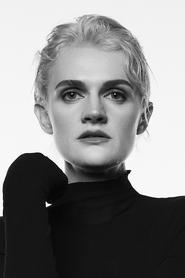
Jessie Buckley is equally superb as Harper, a woman grappling with her past while confronting an escalating series of horrors. Her performance is deeply emotional, grounding the film with a raw, visceral intensity that makes her character’s journey compelling and harrowing. Buckley’s ability to convey a wide range of emotions, from vulnerability to defiance, makes her a perfect counterpart to Kinnear’s unsettling characters.
Men is the first film in a long time to move and terrify me equally. Garland masterfully balances psychological tension with moments of sheer terror, creating an unnerving experience that is as thought-provoking as it is captivating. The film’s blend of unsettling imagery, superb performances, and a deeply unsettling atmosphere make it a standout in contemporary horror, leaving a lasting impression that is difficult to shake.
M
Manuel São Bento
★ 5.0 / 10
MORE SPOILER-FREE REVIEWS @ https://www.msbreviews.com/
"Men is undoubtedly one of the most unique, macabre, weird, expectedly divisive films of the year.
Rob Hardy's cinematography is truly impressive, navigating viewers through eye-popping visual details with the help of mesmerizing makeup and VFX. The score by Ben Salisbury and Geoff Barrow is also quite atmospheric and haunting.
Nevertheless, Alex Garland exhaustively repeats his obvious, heavy-handed message to the point of losing all emotional connection with the underdeveloped protagonist. The last act focuses too much on excessive, unpleasant gore to prove a point over and over again unnecessarily, functioning as a distracting, underwhelming conclusion.
Jessie Buckley - extraordinary - deserves much better, as does the versatile Rory Kinnear, who plays multiple roles."
Rating: C
Keywords
countrysidevacationwoodsflashbackchurchpolice officerapple treegrievingintruderbody horror
Related links