ACERVO · Pelicula · 2026
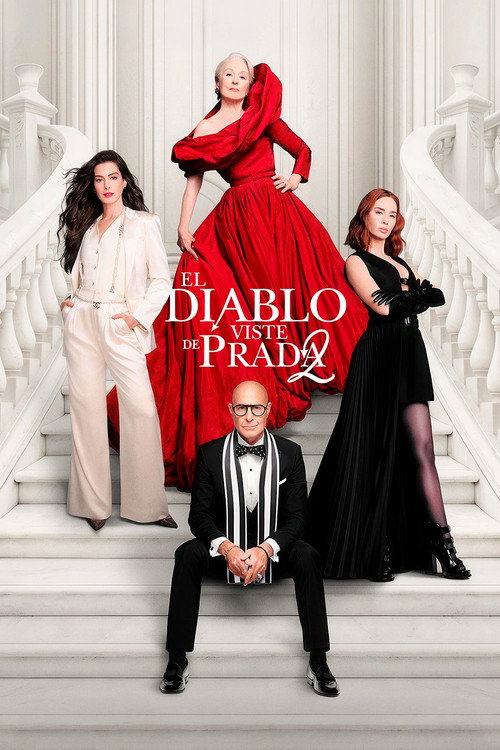
El diablo viste de Prada 2
The Devil Wears Prada 2
Sigue la lucha de Miranda Priestly contra Emily Charlton, su exasistente convertida en ejecutiva rival, mientras compiten por los ingresos por publicidad en medio de la decadencia de los medios impresos y Miranda se acerca a la jubilación.
* 7.0 TMDB (2412)ComediaDramaEstados Unidos
Directores
Paises
Estados Unidos
Estudios
20th Century Studios · Wendy Finerman Productions
Duración
119 min
Clasificación
7 años
Lenguaje Soez
Estreno
29/04/2026
Puntuacion · TMDB
7.0 / 10 (2412)
Donde ver
Streaming
 Disney Plus
 Apple TV Store
 Rakuten TV
 Amazon Video
Radar
Avísame cuando esté en streaming, alquiler o compra por debajo del precio objetivo.
Reparto




Comentarios
Inicia sesión para comentar y debatir sobre esta obra.
Cargando
Resenas de usuarios

Marco-Hugo Landeta Vacas
(CASTELLANO)
Hay secuelas que regresan porque todavía existe algo nuevo que contar y otras que regresan porque el original conserva suficiente cariño como para justificar una nueva vuelta. El diablo viste de Prada 2 se acerca demasiado a lo segundo. Se deja ver, conserva glamour, reúne de nuevo a unos personajes que siguen teniendo presencia y sabe exactamente qué elementos debe recuperar para activar la memoria del espectador. El problema es que esa familiaridad acaba funcionando también como límite: demasiado a menudo parece la misma película reorganizada con veinte años más encima.
La sensación aparece muy pronto porque la estructura vuelve a apoyarse en conflictos que conocemos de sobra: jerarquías profesionales, ambición, lealtades, vida privada que se resiente y una protagonista obligada a medir cuánto está dispuesta a ceder dentro de un mundo brillante y cruel. Todo está actualizado, por supuesto, pero el esqueleto es reconocible. Después de haber visto la primera justo antes, la repetición se nota todavía más.
Meryl Streep sigue teniendo una autoridad cinematográfica extraordinaria. Miranda Priestly continúa dominando muchas escenas con una economía de gestos que ningún otro personaje puede imitar. Una mirada, una pausa o una frase pronunciada casi sin esfuerzo bastan para recuperar inmediatamente la fuerza del icono. El problema no está en Streep, que sigue impecable, sino en que el guion conoce demasiado bien cuánto depende de ella y a veces parece conformarse con ofrecernos la satisfacción de volver a verla funcionar.
Anne Hathaway también vuelve con soltura a Andy, aunque aquí la evolución previa del personaje debería permitir un conflicto más nuevo y menos dependiente de patrones ya utilizados. Andy ya conoce ese mundo, entiende sus códigos y no debería recorrer emocionalmente caminos demasiado parecidos a los de antes. Cuando la película olvida esa diferencia, la sensación de reciclaje se hace evidente.
Emily Blunt conserva la energía necesaria para convertir cada aparición en algo más vivo, y Stanley Tucci sigue aportando humanidad y oficio. El reparto original es la mayor defensa de la secuela: existe química, memoria compartida y una naturalidad que evita que todo sea una simple reunión nostálgica. Pero incluso esa química necesita una historia que la empuje hacia algún lugar distinto.
La película intenta actualizar el entorno hablando del presente de las revistas, del periodismo, de la transformación digital y de un mundo del lujo que ya no funciona exactamente como en 2006. Ahí encuentra algunos de sus mejores momentos porque parece interesada en algo más que repetir relaciones conocidas. La crisis de los medios impresos y la necesidad de justificar su valor en una cultura dominada por la inmediatez ofrecen un terreno mucho más fértil que la simple nostalgia.
Sin embargo, cada vez que asoma una idea nueva, la película parece sentir miedo de alejarse demasiado del molde original. Cambian ciertos contextos, cambia el paisaje, aparecen nuevas relaciones, pero regresan mecanismos muy parecidos. Hasta el traslado del glamour europeo provoca esa sensación de plantilla: antes París, ahora Milán. La broma sale casi sola. Si hubiera una tercera, uno ya espera Madrid antes que una ruptura real de la fórmula.
La parte sentimental es otro punto débil. El nuevo novio de Andy no me encaja con ella y la relación tiene algo funcional, como si el guion necesitara cubrir una casilla más que construir una pareja que realmente creamos. En la primera, se pudiera simpatizar más o menos con Nate, su presencia tenía un sentido claro dentro del conflicto de Andy. Aquí se nota demasiado la función narrativa antes que la relación humana.
Visualmente, en cambio, la película ofrece exactamente lo que uno espera: ropa, espacios elegantes, movimientos rápidos, lujo y una puesta en escena pulida. David Frankel conoce perfectamente este universo y sabe hacerlo atractivo. Pero esa profesionalidad refuerza la paradoja: todo está bien presentado y, al mismo tiempo, cuesta encontrar una razón verdaderamente fuerte para haber vuelto.
No diría que sea una mala película. Es demasiado competente, está demasiado bien interpretada y tiene demasiados recursos como para resultar un desastre. Incluso puede ser agradable reencontrarse con estos personajes. Pero también es una secuela demasiado pendiente de reproducir las sensaciones del original. La nostalgia está mejor administrada que en muchas continuaciones tardías, pero sigue siendo nostalgia.
La primera película podía resultar previsible, pero tenía una transformación central que le daba dirección. Esta segunda parece saber que el público ya conoce cada costura y, en lugar de desmontar el traje para confeccionar algo diferente, prefiere cambiar algunos accesorios. Funciona mientras dura, pero deja una impresión bastante clara: más de lo mismo. Y cuando una secuela llega veinte años después, eso sabe a poco.
(ENGLISH)
Some sequels return because there is still something new to tell, while others return because the original retains enough affection to justify another visit. The Devil Wears Prada 2 comes too close to the latter. It is watchable, still glamorous, reunites characters who retain their presence, and knows exactly which elements to recover in order to activate the audience's memory. The problem is that familiarity also becomes a limitation: too often it feels like the same film rearranged with twenty more years on top.
That feeling appears early because the structure once again rests on conflicts we already know: professional hierarchies, ambition, loyalty, a private life under pressure, and a protagonist forced to decide how much she is willing to give up inside a brilliant and cruel world. Everything is updated, of course, but the skeleton is recognizable. Watching it right after the first film makes the repetition even more obvious.
Meryl Streep still has extraordinary cinematic authority. Miranda Priestly continues to dominate scenes with an economy of gesture nobody else can imitate. A look, a pause or an almost effortless line is enough to restore the force of the icon. The problem is not Streep, who remains impeccable, but a screenplay that knows too well how much it depends on her and sometimes seems satisfied simply to let us enjoy seeing Miranda work again.
Anne Hathaway also slips back into Andy with ease, although the character's previous development should allow for a newer conflict, less dependent on patterns already used. Andy knows this world now, understands its codes, and should not have to travel emotional paths that feel too similar to the ones she already crossed. Whenever the film forgets that difference, the sense of recycling becomes obvious.
Emily Blunt retains enough energy to make every appearance livelier, and Stanley Tucci still brings humanity and craft. The returning cast is the sequel's strongest defense: there is chemistry, shared history and enough natural rapport to keep the film from feeling like a purely nostalgic reunion. But even that chemistry needs a story capable of pushing it somewhere different.
The film does try to update its setting by addressing the present state of magazines, journalism, digital transformation and a luxury world that no longer operates exactly as it did in 2006. Those are some of its best moments because it finally seems interested in something beyond repeating familiar relationships. The crisis of print media and the need to defend its value in a culture dominated by immediacy provide much richer material than nostalgia alone.
Yet whenever a genuinely new idea appears, the film seems afraid to move too far from the original mold. Certain contexts change, the scenery changes, new relationships appear, but very similar mechanisms return. Even the glamorous European destination creates that sense of template: first Paris, now Milan. The joke almost writes itself. If there is a third film, Madrid begins to feel more likely than any real break with the formula.
The romantic side is another weakness. Andy's new boyfriend does not feel convincing to me, and the relationship has something functional about it, as though the screenplay needed to fill a box rather than build a couple we genuinely believe in. In the first film, whether one liked Nate or not, his presence had a clear purpose in Andy's conflict. Here the narrative function is easier to see than the human relationship.
Visually, however, the film delivers exactly what one expects: fashion, elegant spaces, brisk movement, luxury and polished staging. David Frankel knows this world perfectly and knows how to make it attractive. But that professionalism reinforces the paradox: everything is nicely presented while it remains difficult to find a truly strong reason for returning.
I would not call it a bad film. It is too competent, too well acted and too well resourced to be a disaster. Reuniting with these characters can even be enjoyable. But it is also a sequel too focused on reproducing the sensations of the original. The nostalgia is handled better than in many belated continuations, but it is still nostalgia.
The first film could be predictable, yet it had a central transformation that gave it direction. This sequel seems to know that the audience can already see every seam and, instead of taking the garment apart to make something different, it prefers to change a few accessories. It works while it lasts, but leaves a very clear impression: more of the same. And after a twenty-year wait, that feels like too little.
Palabras clave
new york citybased on novel or booksequelfashionfashion magazinedramedymagazine editorfashion industryfashionistawhimsical
Enlaces relacionados