ACERVO · Pelicula · 2022
Not Okay
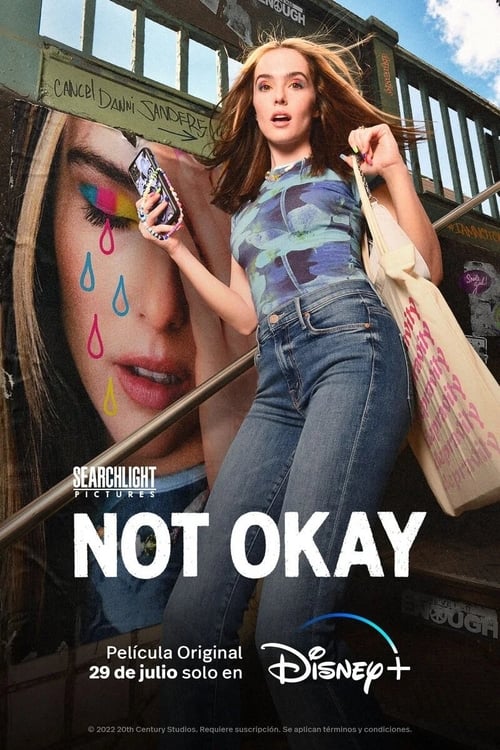
Una joven desesperada por amigos y fama, finge un viaje a París para actualizar su presencia en las redes sociales. En el mundo real tiene lugar un incidente aterrador que se convierte en parte del viaje imaginario y que ella deberá resolver.
* 6.2 TMDB (531)ComediaDramaEstados Unidos
Directores
Paises
Estados Unidos
Estudios
Makeready · Searchlight Pictures
Duración
100 min
Clasificación
16 años
Estreno
29/07/2022
Puntuacion · TMDB
6.2 / 10 (531)
Donde ver
Streaming
 Disney Plus
Radar
Avísame cuando esté en streaming, alquiler o compra por debajo del precio objetivo.
Reparto








Comentarios
Inicia sesión para comentar y debatir sobre esta obra.
Cargando
Resenas de usuarios

Marco-Hugo Landeta Vacas
(CASTELLANO)
Al principio es fácil juzgar a Danni. Vive pendiente de cómo la perciben los demás, confunde visibilidad con afecto y parece convencida de que una vida que no puede exhibirse en internet vale un poco menos. Not Okay podría haberse quedado en la caricatura de la generación Instagram y montar alrededor una comedia cruel sobre influencers. Pero Quinn Shephard hace algo más incómodo: deja que Danni siga profundamente equivocada mientras poco a poco deja de ser solo ridícula. La película entiende bien una idea ya conocida pero todavía vigente: las redes no inventan la necesidad de aprobación, pero la convierten en un sistema permanente de puntuación. Cada reacción, seguidor y comentario ofrece una confirmación inmediata de que existes y de que importas. Danni no busca fama por ambición profesional; busca que alguien la mire, la considere interesante y le conceda una identidad que ella no sabe construir por sí misma.
Zoey Deutch hace muchísimo para que ese personaje funcione. Tiene que interpretar a alguien irritante, egocéntrico y capaz de decisiones moralmente indefendibles sin convertirla en una villana plana. La película incluso juega con lo difícil que resulta simpatizar con ella. Pero Deutch va introduciendo grietas: inseguridad, soledad, necesidad afectiva y una desesperación bastante triste por pertenecer a algún sitio. Entenderla no significa justificarla, y ahí está una de las mejores decisiones de la película: no cae en pensar que humanizar a alguien equivale a absolverlo. El daño sigue siendo daño aunque quien lo causó también sufra, y una disculpa puede ser sincera sin generar automáticamente perdón. Esa idea me parece bastante más madura que la típica estructura de caída y redención en la que basta con reconocer el error para recuperar el cariño de todos.
Mia Isaac aporta el contrapeso emocional necesario. Frente a una protagonista que al principio convierte casi todo en contenido, su presencia recuerda que hay experiencias que no deberían reducirse a una herramienta para conseguir atención. Esa confrontación entre dolor real y dolor utilizado resulta más potente cuando la película abandona parte de la comedia y empieza a tomarse en serio las consecuencias emocionales de lo ocurrido.
También me interesa cómo la película muestra internet como una máquina capaz de construir y destruir identidades con la misma velocidad: la misma multitud que necesita elevar a alguien puede necesitar después castigarlo, sin demasiada reflexión ni proporción. Dylan O'Brien funciona muy bien como representación de esa cultura superficial que Danni desea conquistar: apariencia, lenguaje, pose, seguidores y una personalidad construida a partir de lo que parece funcionar ante una pantalla. Resulta gracioso, pero también ayuda a entender por qué ella desea con tanta intensidad entrar en ese mundo.
La comparación con Pedro y el lobo me surgió durante la película, porque toda mentira sostenida demasiado tiempo contiene el miedo de que la verdad llegue cuando ya hayas destruido tu credibilidad. Pero Not Okay es más interesante cuando se aleja del castigo mecánico de una fábula: las consecuencias más duras pueden ser simplemente comprender lo que has hecho y descubrir que ese conocimiento no te permite deshacerlo. Y ahí es donde la película me sorprendió emocionalmente. Llegué a sentir pena por ella, no porque merezca que olvidemos todo, sino porque detrás de la impostura aparece alguien extraordinariamente sola. Hay un momento de afecto familiar especialmente sencillo que funciona porque no depende de la imagen que ha creado ni de sus seguidores. Quinn Shephard tampoco fuerza una reconciliación sentimental para que salgamos tranquilos: prefiere aceptar que determinadas heridas pertenecen a quien las ha sufrido, y esa negativa a regalar un cierre agradable es lo que terminó elevando la película para mí.
Quizá la sátira sobre influencers, cancelación y hambre de notoriedad no sea especialmente novedosa, y el guion a veces subraya demasiado lo que ya habíamos entendido. Pero cuando deja de intentar diagnosticar internet y se concentra en sus personajes, encuentra algo más valioso: la diferencia entre arrepentirse porque has perdido tu reputación y empezar a comprender de verdad el dolor que causaste. Not Okay empieza pareciendo una comedia sobre una chica insoportable que quiere ser famosa y termina siendo algo bastante más triste sobre soledad, autenticidad, culpa y responsabilidad. Su mayor acierto es no pedirnos que decidamos si Danni es buena o mala. Nos obliga a aceptar algo más incómodo: alguien puede hacer algo imperdonable, lamentarlo sinceramente, necesitar afecto y seguir sin tener derecho a que los demás le devuelvan aquello que rompió.
(ENGLISH)
At first it's easy to judge Danni. She lives according to how other people see her, confuses visibility with affection, and seems convinced that a life that can't be shown online is worth a little less. Not Okay could have stopped at the Instagram-generation caricature and built a cruel influencer comedy around it. But Quinn Shephard does something more uncomfortable: she lets Danni stay profoundly wrong while gradually becoming more than merely ridiculous. The film understands a familiar but still relevant idea well: social media doesn't invent the need for approval, but it turns it into a permanent scoring system. Every reaction, follower and comment offers instant confirmation that you exist and that you matter. Danni isn't really chasing fame out of professional ambition; she wants someone to look at her, find her interesting and grant her an identity she doesn't know how to build for herself.
Zoey Deutch does an enormous amount to make that character work. She has to play someone irritating, self-absorbed and capable of morally indefensible choices without turning her into a flat villain. The film even plays with how hard she is to like. But Deutch gradually introduces cracks: insecurity, loneliness, emotional need and a rather sad desperation to belong somewhere. Understanding her doesn't mean excusing her, and that's one of the film's best decisions: it never falls into thinking that humanizing someone equals absolving them. Harm remains harm even when the person who caused it suffers too, and an apology can be sincere without automatically producing forgiveness. That idea feels considerably more mature than the usual fall-and-redemption structure where admitting the mistake is enough to recover everyone's affection.
Mia Isaac provides the emotional counterweight the film needs. Against a protagonist who at first turns almost everything into content, her presence reminds us that some experiences shouldn't be reduced to tools for attention. That collision between real pain and pain used for personal benefit becomes more powerful once the film leaves part of its comedy behind and takes the emotional consequences seriously.
I also like how the film shows the internet as a machine able to build and destroy identities at the same speed: the same crowd that needs to elevate somebody may later need to punish them, with little reflection or proportion. Dylan O'Brien works very well as a representation of the superficial culture Danni wants to enter: appearance, language, pose, followers and a personality assembled from whatever works on a screen. He's funny, but he also helps explain why she wants access to that world so badly.
The story of the boy who cried wolf came to mind while watching, because every lie sustained too long carries the fear that the truth will arrive only after your credibility is gone. But Not Okay is more interesting when it moves away from a fable's mechanical punishment: the harshest consequence can simply be understanding what you've done and discovering that understanding doesn't undo it. That is where the film surprised me emotionally. I ended up feeling sorry for her, not because she suddenly deserves to have everything forgotten, but because behind the deception there is someone extraordinarily lonely. One especially simple moment of family affection works because it has nothing to do with the identity she built or her followers. Quinn Shephard also refuses to force a sentimental reconciliation just to send us home comfortable: she accepts that certain wounds belong to those who suffered them, and that refusal to hand us a pleasant resolution is what ultimately elevated the film for me.
The satire of influencers, cancellation and the hunger for attention may not be especially original, and the script sometimes overstates what we'd already understood. But when it stops trying to diagnose the internet and focuses on its characters, it finds something more valuable: the difference between regretting something because your reputation collapsed and genuinely beginning to understand the pain you caused. Not Okay starts out looking like a comedy about an unbearable girl who wants to be famous and ends up being something much sadder about loneliness, authenticity, guilt and responsibility. Its best decision is never asking us to decide whether Danni is good or bad. It forces us to accept something more uncomfortable: a person can do something unforgivable, sincerely regret it, need affection, and still have no right to demand that others give back what they broke.
Palabras clave
new york citysatiresocial mediawoman directorsocial media influencercancel culture
Enlaces relacionados