(CASTELLANO)
Lo fácil habría sido pensar que esto ya era exprimir demasiado una fórmula que había funcionado muy bien. Después de tres temporadas de capos, persecuciones, política, corrupción, violencia, voz en off y ascensos criminales, el riesgo de repetirse era enorme. Y, sin embargo, esta continuación consigue justificar bastante bien su existencia. No porque descubra un mundo completamente nuevo, sino porque cambia el foco y demuestra que la historia del narcotráfico no era una línea cerrada, sino una cadena de relevos, pactos, traiciones y oportunidades. El escenario cambia, los nombres cambian, la textura cambia, pero la enfermedad sigue siendo la misma.
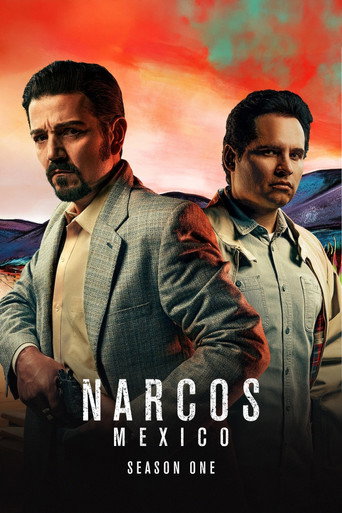
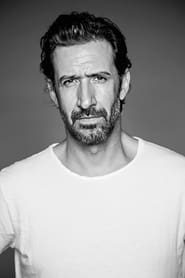
Lo que más me interesa es que aquí el origen tiene un peso especial. La serie no arranca con una maquinaria ya plenamente formada, sino con la sensación de estar viendo cómo algo se organiza, cómo se profesionaliza, cómo deja de ser una suma de plazas y jefes locales para convertirse en una estructura mucho más ambiciosa. Félix Gallardo funciona precisamente por eso: no es un Escobar mexicano ni intenta serlo. Diego Luna lo interpreta de una manera más contenida, más fría, menos volcánica. Su peligro no está tanto en el estallido inmediato como en la capacidad de calcular, negociar, observar y entender antes que otros que el verdadero poder no consiste solo en mandar, sino en conectar intereses.
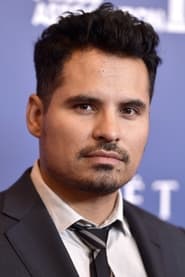
La primera temporada se sostiene muy bien por el choque entre esa construcción del imperio y la figura de Kiki Camarena. Michael Peña aporta una humanidad necesaria, porque su personaje introduce una mirada más directa, más moral, más vulnerable. La serie funciona mejor cuando no reduce el conflicto a policías contra narcos, sino que muestra cómo cada paso hacia la justicia se estrella contra una red de complicidades enorme. Políticos, policías, empresarios, militares, intermediarios, familias y gobiernos se mezclan hasta que la frontera entre legalidad y crimen empieza a parecer casi decorativa. Ahí está lo más perturbador: no es solo que haya criminales, es que demasiadas instituciones aprenden a convivir con ellos.
También me gusta que sea una serie más seca y, a ratos, más elegante que la anterior. Tiene menos fiebre inmediata, menos monstruo central devorándolo todo, pero gana en paciencia y en atmósfera. Los paisajes, las casas, las carreteras, las oficinas y los desiertos parecen formar parte de una misma red de amenaza. La violencia puede aparecer de golpe, pero muchas veces lo inquietante está antes, en la espera, en una conversación, en una llamada, en alguien que sabe demasiado y todavía no sabe que ya está perdido. Ese tono le sienta bien, aunque también hace que algunas partes sean más densas y menos adictivas en un sentido fácil.
A lo largo de sus tres temporadas se nota la tensión entre repetir el éxito y contar algo con identidad propia. Hay momentos en los que el mecanismo se reconoce demasiado: ascenso, traición, caída, voz en off, datos históricos, personajes que entran para ocupar un lugar dentro del tablero. Pero cuando la serie encuentra su propio pulso, funciona muchísimo. La segunda temporada me parece especialmente sólida en su manera de mostrar cómo el poder se descompone desde dentro. Y la tercera, aunque cambia bastante y se vuelve más coral, confirma esa idea tan amarga: cada vez que parece cerrarse una etapa, aparece otra forma del negocio, más dispersa, más violenta o más difícil de controlar.
El problema es que no siempre evita la sensación de estar viendo una variación de algo ya conocido. No tiene el factor sorpresa de la serie original ni una presencia tan magnética como la de Wagner Moura. A veces se echa de menos una figura capaz de arrastrarlo todo con esa fuerza hipnótica. También hay personajes y tramas que podrían tener más espacio, y la ambición de cubrir tantos nombres, territorios y equilibrios políticos provoca algunos altibajos. Pero incluso cuando se vuelve irregular, mantiene un nivel técnico altísimo y una capacidad notable para convertir la historia reciente en un thriller sombrío, complejo y muy entretenido.
Al final, me parece una ampliación muy digna, bastante mejor de lo que podía esperarse si uno la mira solo como un intento de seguir explotando el mismo filón. No alcanza para mí la fuerza global de las tres temporadas anteriores, pero sí aporta una pieza importante al mosaico: la idea de que el narcotráfico moderno no nace de un solo genio criminal, sino de una combinación de ambición, Estado débil, corrupción, dinero, geografía y demanda internacional. Es repetitiva a veces, sí, pero porque también lo es el propio horror que retrata. Cambian los capos, cambian las rutas, cambian los discursos. Lo que no cambia es la maquinaria. Y eso la convierte en una serie dura, elegante, adictiva y muy amarga.
(ENGLISH)
It would have been easy to think this was simply squeezing too much out of a formula that had already worked very well. After three seasons of kingpins, chases, politics, corruption, violence, voice-over and criminal rises, the risk of repetition was enormous. And yet this continuation manages to justify its existence quite well. Not because it discovers a completely new world, but because it shifts the focus and shows that the history of drug trafficking was not a closed line, but a chain of relays, pacts, betrayals and opportunities. The setting changes, the names change, the texture changes, but the disease remains the same.
What interests me most is that the origin has special weight here. The series does not begin with a fully formed machine, but with the feeling of watching something organize itself, professionalize itself, stop being a collection of plazas and local bosses and become a much more ambitious structure. Félix Gallardo works precisely because of that: he is not a Mexican Escobar and does not try to be. Diego Luna plays him in a more restrained, colder, less volcanic way. His danger lies not so much in immediate explosion as in the ability to calculate, negotiate, observe and understand before others that true power is not only about giving orders, but about connecting interests.
The first season holds together very well through the clash between that construction of an empire and the figure of Kiki Camarena. Michael Peña brings a necessary humanity, because his character introduces a more direct, more moral, more vulnerable point of view. The series works best when it does not reduce the conflict to cops versus traffickers, but shows how every step toward justice crashes against an enormous network of complicities. Politicians, police officers, businessmen, soldiers, intermediaries, families and governments mix until the border between legality and crime begins to seem almost decorative. That is what is most disturbing: it is not only that there are criminals, but that too many institutions learn to live with them.
I also like that it is a drier and, at times, more elegant series than the previous one. It has less immediate fever, less of a central monster devouring everything, but gains in patience and atmosphere. The landscapes, houses, roads, offices and deserts seem to belong to the same network of threat. Violence may appear suddenly, but very often the unsettling part comes before, in the waiting, in a conversation, in a phone call, in someone who knows too much and does not yet know that he is already lost. That tone suits it well, although it also makes some parts denser and less easily addictive.
Across its three seasons, you can feel the tension between repeating success and telling something with its own identity. There are moments when the mechanism is too recognizable: rise, betrayal, fall, voice-over, historical data, characters entering to occupy a place on the board. But when the series finds its own pulse, it works extremely well. The second season seems especially solid to me in the way it shows power decomposing from within. And the third, although it changes quite a lot and becomes more choral, confirms that bitter idea: every time one stage seems to close, another form of the business appears, more scattered, more violent or harder to control.
The problem is that it does not always avoid the feeling of watching a variation on something already known. It does not have the surprise factor of the original series or a presence as magnetic as Wagner Moura's. At times you miss a figure capable of dragging everything along with that hypnotic force. There are also characters and storylines that could have had more room, and the ambition to cover so many names, territories and political balances creates some unevenness. But even when it becomes irregular, it maintains a very high technical level and a remarkable ability to turn recent history into a somber, complex and very entertaining thriller.
In the end, it seems to me a very worthy expansion, considerably better than one might expect if it is seen only as an attempt to keep exploiting the same vein. For me, it does not reach the overall force of the previous three seasons, but it does add an important piece to the mosaic: the idea that modern drug trafficking is not born from one criminal genius, but from a combination of ambition, weak State, corruption, money, geography and international demand. It is repetitive sometimes, yes, but because the horror it portrays is repetitive too. The kingpins change, the routes change, the speeches change. What does not change is the machine. And that makes it a hard, elegant, addictive and very bitter series.

 Netflix
 Netflix Standard with Ads